The Park and the Rose Garden
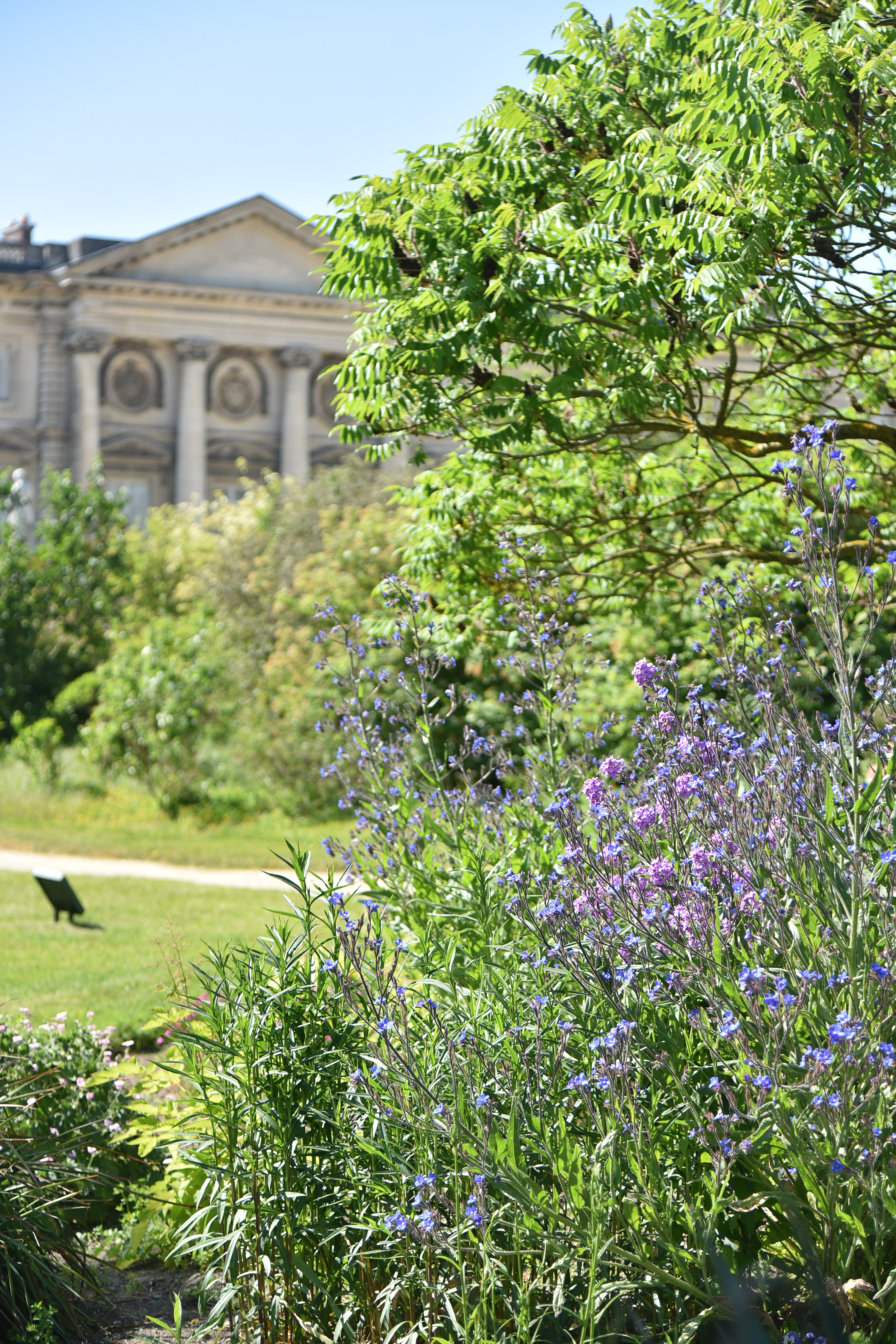
The Château de Compiègne Park is a landscaped garden created under the First Empire by architect Berthault. It extends at the foot of the terrace of the castle, in the majestic perspective of the Allée des Beaux-Monts.
From the French formal garden to the landscaped garden
A ‘grand park’ measuring 700 ha was created in the space between the garden and the forest, which covered almost 5 km of the famous Allée des Beaux-Monts. A green arbour and elegant pavilions complete the ensemble, which to the present day has seen little change.
It was only during the time of the Second Empire in 1859 that the sculptural decoration of the small park was finally completed. However, the park suffered during the war of 1870. Around ten statues were sent to the Louvre, with some of them never returning and being replaced by others. Nevertheless, the lack of a unified decorative scheme and the composite nature of this collection of sculptures correspond rather well to the Second Empire’s taste for eclecticism.
The Rose Garden
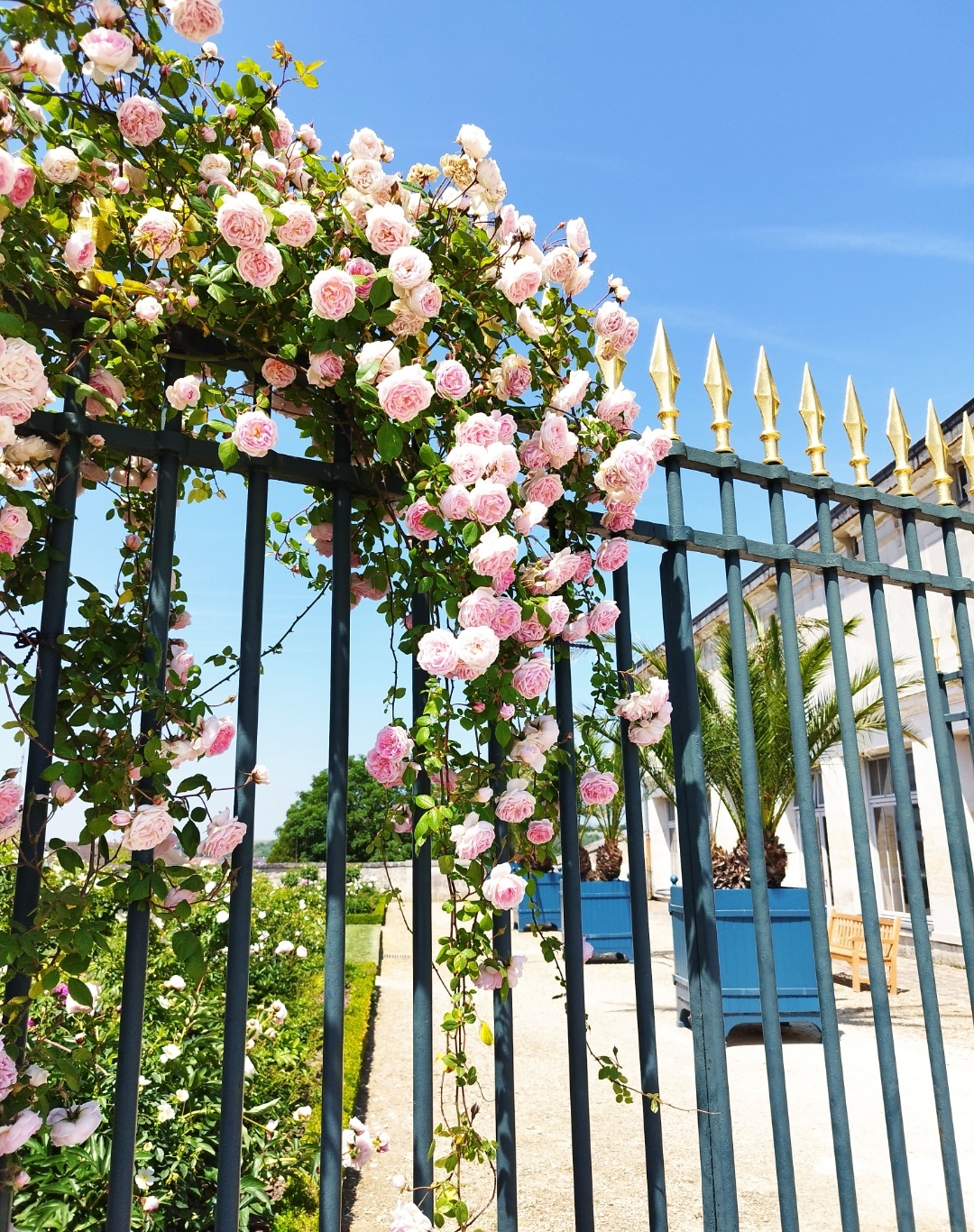
Created in 1820 by Louis-Martin Berthault (1771-1823) in the place of the ‘Bosquet du Roi’ (King’s Grove), the Rose Garden is located close to the temperate greenhouse which was built in the same year on the Porte Chapelle terrace.
The garden itself was restored twenty years ago based on records dating back to 1821 and thorough historical research with the aim of respecting the vision of its creator. The rose species presented belong to large families of antique roses, including Damask, Centifolia, Gallica and Noisette roses. These are planted alongside three types of perennial plants: peonies, oriental poppies and irises. During the flowering season, this exceptional arrangement treats visitors to a wide variety of colours and fragrances.
Le parc du Château de Compiègne
Les quinconces de tilleuls encadrent le jardin: un berceau de verdure et d'élégants pavillons. Le «grand parc» de 700 hectares, situé entre le jardin et la forêt, est traversé sur près de 5 km par la fameuse allée des Beaux-Monts.
Les deux premières sculptures du parc furent installées en 1811 sous la direction de Berthault. Pendant le XIXème siècle, de nombreuses pièces rejoignent les chemins du parc mais c’est seulement sous le Second Empire, en 1859, que la décoration sculptée fut enfin achevée.
L’aspect composite de l'ensemble, correspond assez bien au goût nettement marqué du Second Empire pour l'éclectisme.
Le Jardin des Roses
Créé en 1820 par Louis-Martin Berthault (1771-1823) à l’emplacement du «Bosquet du Roi», le Jardin des Roses est situé à proximité de la serre tempérée, construite la même année sur la terrasse de la Porte Chapelle.
Le jardin a été restitué il y a vingt ans, à partir d’un relevé de 1821 et de recherches historiques approfondies, dans le souci de respecter l’esprit du créateur.
Les espèces présentées sont issues de grandes familles de roses anciennes : roses de Damas, centifolia, gallica et noisettiana. Elles sont associées à trois plantes vivaces : pivoines, pavots d’Orient, iris. Pendant la période de floraison, cet ensemble exceptionnel offre aux visiteurs une grande variété de coloris et de parfums